
The Core Outsourcing Fallacy: Why Internal Teams Routinely Leak 4% of Operating Spend
Every mid-market manufacturing CEO prides themselves on protecting core operational focus. You do not ask your plant managers to design your corporate accounting systems, nor do you expect your line supervisor to draft your enterprise legal agreements. For over four decades, the entire logic of industrial scale has been built on an unshakeable premise: focus on your core competency, and outsource peripheral specialties to dedicated experts.
Yet, a massive financial blind spot persists inside the modern manufacturing P&L.
While leadership teams ruthlessly outsource components of their digital infrastructure or logistics fulfillment, they leave the highly specialized negotiation and ongoing governance of their non-strategic operational expenses (OpEx) entirely in the hands of generalist internal procurement teams.
This is The Core Outsourcing Fallacy. It is the mistaken executive assumption that because an internal purchasing department can successfully negotiate a raw material contract, they are equally equipped to extract optimal, risk-adjusted pricing across highly opaque, specialized overhead categories.
The result of this oversight isn't just an administrative annoyance. It is a continuous, unmonitored tax on your bottom line. Industry benchmarks consistently validate that mid-market industrial firms leak an average of 4% of their total operating spend directly into vendor profit margins through un-enforced discounts, structural rate-card inertia, and undetected billing drift.
In an asset-heavy sector where margins dictate valuation multiples, treating specialized contract negotiation as a part-time internal task is a structural vulnerability.
I. The Database Asymmetry: Why Generalists Lose to Sales Specialists
To understand why highly competent internal procurement teams routinely leak capital in non-strategic spend categories, one must look at the structural power dynamic of a standard vendor negotiation.
An internal purchasing manager, handling a dozen competing priorities, will typically interact with a specialized service provider once every three to five years. They are forced to rely on the data presented by the vendor's salesperson.
The vendor’s sales representative, by contrast, lives in that specific market every single day. They are backed by national corporate pricing matrixes, specialized legal teams, and sophisticated margin-maximization software engineered specifically to protect vendor profitability.
This creates a severe information asymmetry.
+-------------------------------------------------------------------+
| THE CORE OUTSOURCING INFORMATION GAP |
+-------------------------------------------------------------------+
| INTERNAL PROCUREMENT GENERALIST | VENDOR CONTRACT SPECIALIST |
| • Negotiates category every 3-5 yrs| • Negotiates category daily |
| • Focuses on top-line discount | • Configures hidden fee tiers|
| • No external benchmark visibility | • Backed by national pricing |
+-------------------------------------------------------------------+ | v
+-------------------------------------------------------------------+
| THE REALITY: You are bringing a knife to a data fight. |
| Vendor profit margins remain protected behind complex billing code|
+-------------------------------------------------------------------+
When an internal team attempts to independently run a Request for Proposal (RFP) for a peripheral service, they almost always default to negotiating the visible, top-line list price.
However, no vendor voluntarily yields their core profit margin. What the salesperson gives away on the top-line discount, they quietly reclaim within the complex, fine-print terms of the contract: minimum usage surcharges, delivery adjustments, specialized ancillary fees, and automated year-over-year rate escalation clauses.
Because internal teams lack access to an aggregated, nationwide database of actual transactional pricing benchmarks, they have no statistical method for verifying if a quote is genuinely optimal or merely a well-packaged sales pitch. They leave the negotiation table believing they won a discount, while their P&L quietly begins absorbing structural rate-creep.
II. The Myth of the Needs Assessment
The financial drain of the Core Outsourcing Fallacy deepens significantly after the contract is signed. Vendor salespeople are not incentivized to perform objective, line-level needs assessments; they are incentivized to move inventory and secure long-term recurring revenue.
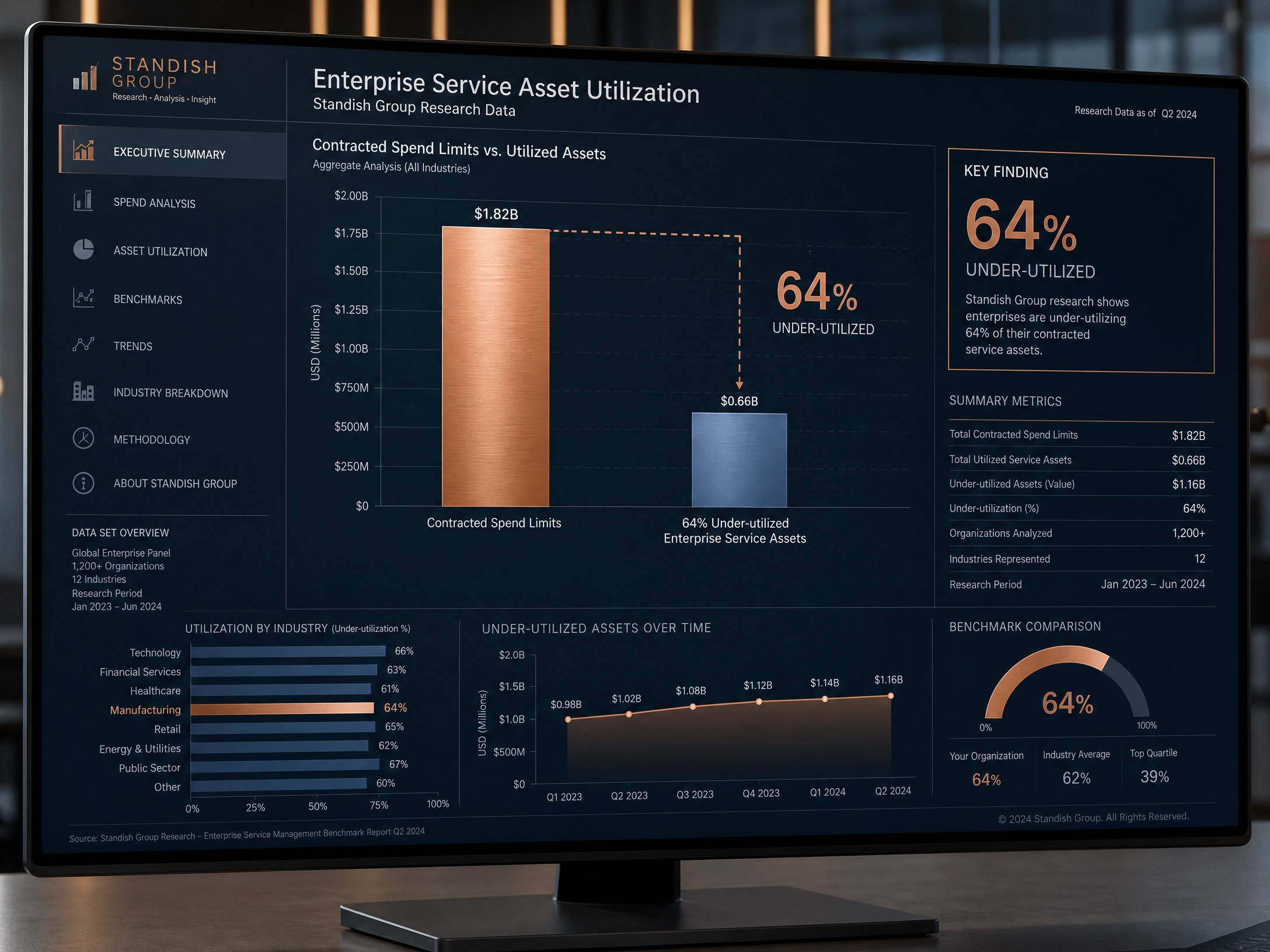
Independent research confirms the scale of this over-specifying epidemic. A landmark study by the Standish Group revealed that across enterprise service and software architectures, up to 64% of features, licenses, or paid service tiers are rarely or never utilized. Without specialized external benchmarks, manufacturers frequently end up over-specifying their actual operational requirements.
Greg Rusnell, Managing Director at Profit Logic, frames the issue directly:
"No vendor voluntarily gives up their profit margin. When an internal team attempts to independently challenge a supplier without forensic, market-backed data, they aren't conducting an objective needs assessment—they are simply accepting the minimum concession the vendor's sales rep needs to throw out to preserve the account and keep executive leadership from looking deeper."
Consider how this lack of data-driven stewardship manifests across the operation:
Industrial Logistics & Freight Billing: Data from the National Industrial Transportation League (NITL) indicates that roughly 15% to 20% of freight invoices contain billing errors or un-enforced rate-card discounts. Internal teams routinely miss these because they process invoices as standard utility bills rather than auditing them against contracted line-item agreements.
Telecom & Field Fleet Infrastructure: Procurement generalists frequently buy standardized, enterprise-wide packaging tiers for data and logging infrastructure. Over time, up to a third of those paid connections drop into stagnation—assigned to departed personnel or under-utilized by field staff, while the automated payments continue uninterrupted.
Complex Fleet Fuel Programs: Without continuous monitoring, fuel networks are highly susceptible to "price creep" via un-enforced regional discounts and administrative surcharge drift that bypasses standard accounts payable checks.
When an internal team manages these categories, they treat the monthly bill as a utility invoice to be rubber-stamped. They do not have the time, the specialized diagnostic tools, or the market data required to continuously audit invoices against real-time consumption.
III. The Real Capital Drain: Quantifying the Cost of Doing Nothing
For mid-market executives navigating tight margins, delaying the forensic optimization of non-strategic spend carries a compounding financial penalty. Every month an un-optimized agreement is allowed to run through contract inertia, capital is permanently transferred from your balance sheet to your vendor’s bottom line.
This ongoing drag on your EBITDA can be modeled as a continuous cash burn. The absolute cost of maintaining the status quo across your peripheral expenses is calculated through a definitive formula:
Where:
Maintenance Tax: The direct capital premium paid to vendors above true competitive market rates due to un-enforced discounts and hidden ancillary surcharges.
Margin Erosion: The steady degradation of your operating margin caused by automated price-creep and unmonitored service utilization over the lifecycle of the contract.
Forfeited Opportunity: The lost compounding return of the capital that should have been liberated to fund your strategic technology roadmaps, automated machinery upgrades, or debt reduction mandates.
Case Study: The Cost of Inertia
Consider a multi-site industrial fabricator running a steady-state operation. The internal team ran an independent, internal review of their fleet, logistics, and service agreements, securing what they believed was an optimal 5% top-line concession from their incumbent providers.
When an independent forensic review was launched, cross-referencing their invoices against a national transactional database, the real story emerged. The vendor had quietly introduced tiered minimum-usage surcharges and automatic escalation clauses that completely wiped out the top-line discount within 12 months. A forensic needs assessment stripped away over-specified service tiers, corrected billing errors, and established continuous invoice governance. The result was an immediate, structural $320,000 annualized reduction in non-strategic overhead—capital that was previously being lost to vendor margin insulation.
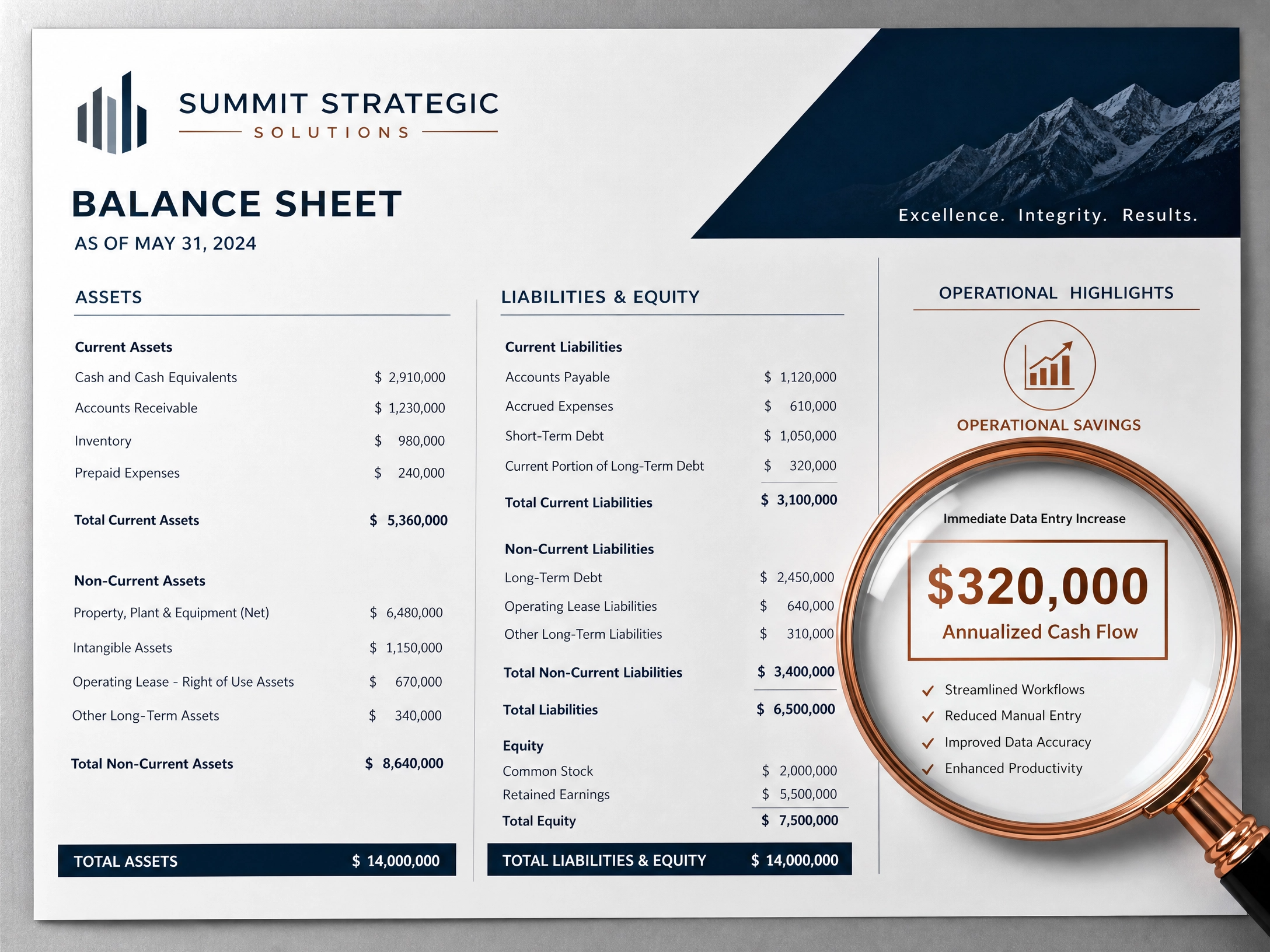
On a typical $50 million manufacturing P&L, a standard 4% leakage represents an indicative $2,000,000 in annualized, recurring cash flow that is completely lost to the business.
When an executive team allows an internal department to try to solve this problem through casual, independent re-negotiation with incumbent vendors, they prolong the burn. A salesperson facing pressure from an existing client will occasionally offer a minor concession to preserve the account. However, that concession is rarely based on a true needs assessment or optimal market pricing; it is simply the minimum correction required to keep the internal team from looking deeper.
IV. Shared Success Stewardship: A Fundamental Shift in Approach
Resolving the Core Outsourcing Fallacy requires an entirely different model of corporate engagement. True operational governance cannot be achieved through traditional fee-for-service consulting firms that charge heavy upfront retainers, deliver theoretical reports, and leave the execution risk entirely on your shoulders.
At Profit Logic, we approach capital liberation through a model of shared success stewardship.
We do not provide generic advice or static templates. We act as an independent financial governance engine that executes a comprehensive, forensic sweep across more than 15 complex, non-strategic OpEx categories simultaneously.
Our methodology represents a complete departure from traditional procurement support in three distinct ways:
1. Zero Upfront Capital Risk
Our entire model is strictly outcome-aligned. The complete forensic discovery, the line-level needs assessment, and the implementation of our market-backed optimizations require zero upfront capital outlay from your running budget. We are a net-zero cost to your organization until we deliver a verified, net-positive cash flow result into your bank account.
2. Implementation and Lifecycle Governance
An audit is only a look-back; stewardship requires staying in the trenches. Traditional cost-reduction approaches operate on a "one-and-done" methodology, leaving the client vulnerable to immediate price creep. We reject this approach. We remain actively engaged over the course of the full contract lifecycle, taking on the technical burden of mapping the optimization, validating the vendor implementation, and continuously auditing the resulting invoices to permanently insulate your new margins against vendor rate-creep and administrative decay.
3. Protecting Intellectual Property and Capital Velocity
We leverage a comprehensive database of national pricing benchmarks and proprietary optimization logic developed across thousands of industrial contracts. Because our performance is entirely funded out of the verified savings we successfully lock down, our incentives are perfectly mirrored with yours.
We do not allow our intellectual property to be utilized for casual, independent vendor matching, because we know that no vendor voluntarily surrenders their margin without forensic, data-backed pressure. If an incumbent provider attempts to match pricing mid-review, that correction is a direct result of our market intervention and is fully managed under our governance umbrella to ensure the savings actually materialize.
By engaging an independent specialist, you effectively eliminate the data asymmetry that compromises internal teams. You stop treating complex, non-strategic contracts as simple utility bills. You reclaim your 4% Modernization Dividend, eliminate the hidden leakages in your P&L, and transform your existing operational waste into an internal capital fund to drive your future growth. The capital is already in your building. Let’s go find it.
