
The Financial Psychology of Doing Nothing: Why Manufacturers Sabotage Their Own Growth
If you sit on the board or in the C-suite of a mid-market manufacturing plant, you likely have a list of strategic priorities that never seems to shrink.
Perhaps it is a shop-floor robotics integration, a plant-wide ERP migration, or an infrastructure upgrade required to qualify for higher-tier supply contracts. You know the initiative is critical. You know that delaying it actively erodes your market position.
Yet, when the capital planning meeting concludes, the outcome is almost always the same: Deferred.
The standard executive explanation is usually financial. You tell yourself that credit markets are too tight, commercial interest rates are too high, or cash flow is too volatile to commit to a major capital project right now.
That explanation is almost entirely wrong.
The primary barrier to your strategic growth is rarely a lack of money. It is the psychological comfort of the status quo. Across thousands of enterprise interactions, behavioral research reveals that up to 60% of B2B sales cycles do not end in a lost deal to a competitor - they end in customer indecision.
Mid-market leadership teams routinely choose to let active, measurable waste continue bleeding out of their operating ledgers because doing nothing feels safer than taking action.
The Four Mental Traps of the C-Suite
Decision science calls this systemic inaction Status Quo Bias. In a complex industrial organization, it manifests as four distinct psychological traps that actively work against your financial best interests:
1. The Omission Bias: Active Risk vs. Passive Bleed
Psychologically, executives weigh the risk of an active commission far heavier than the risk of a passive omission.
If you approve a new initiative and it encounters friction, your name is attached to the misstep.
If you do nothing, and your operational margins quietly decay over three years through vendor price drift, no single executive gets called to the carpet.
You perceive staying the course as zero-risk, even when staying the course is actively costing you hundreds of thousands of dollars in unexamined overhead.
2. The Internal Control Delusion
"We will just have our internal team handle it next quarter."
This is the most common executive defense mechanism. It allows leadership to feel responsible without actually taking action. You push the task down to an already overburdened controller or purchasing manager who handles peripheral vendor contracts once every three years.
Meanwhile, vendor sales engines negotiate those exact terms every single day. You are matching an internal generalist against a specialized sales machine designed specifically to protect supplier profit margins. Predictably, the internal review gets pushed aside by daily plant fires, and Goliath wins again.
3. Cynical Saturation & Message Fatigue
Mid-market finance leaders are bombarded with cold pitches, generic cost-reduction promises, and software platforms claiming effortless ROI.
After years of hearing high-level sales hype that fails to deliver, a healthy executive skepticism hardens into rigid cynicism. You begin to assume that every outside initiative will consume massive internal bandwidth, disrupt plant operations, or fail to produce real line-item savings.
Cynicism becomes a shield to avoid doing the hard work of forensic investigation.
4. Overestimating the Friction of Change
When leadership considers reviewing non-strategic operational spend—things like LTL freight, waste streams, telecom, packaging, or specialized SaaS licenses—the immediate assumption is operational disruption.
You envision broken vendor relationships, complex vendor transitions, and endless hours spent pulling historical invoices. The perceived headache of the process completely obscures the massive financial dividend sitting on the other side.

The Cost of Inaction: How "Safe" Choices Burn Capital
In corporate finance, doing nothing is not a neutral position. It is an active financial decision to fund your suppliers' profit margins at the expense of your own facility.
Every single month you delay capturing the unexamined waste inside your P&L, your business pays a silent Maintenance Tax. Operational margin erosion quietly compounds alongside the forfeited opportunity of projects you put on hold.
You are effectively choosing to leave up to 4% of your top-line revenue trapped in peripheral supplier contracts - money that could immediately self-fund the very modernization project sitting stalled on your desk.
Rewiring the Decision: Success-Based Stewardship
Overcoming systemic C-suite indecision requires changing how the initiative is structured. You do not need more advice, more software licenses, or internal assignments that never get completed. You need an operational framework designed specifically to eliminate executive risk.
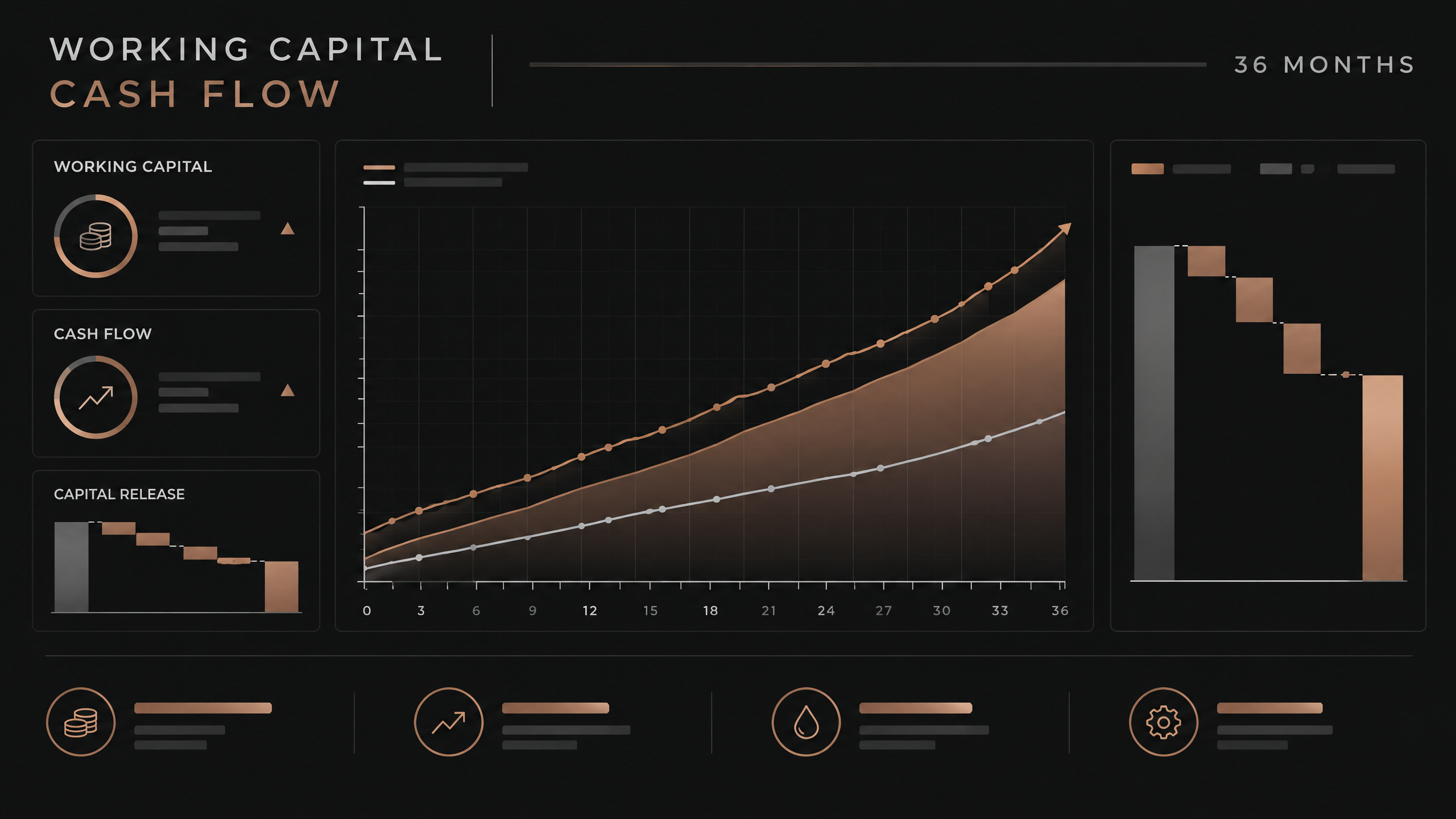
That is why Profit Logic operates on a model of Success-Based Stewardship:
Zero Internal Bandwidth Drain: We perform the forensic heavy lifting, line-item auditing, and market benchmarking so your team stays 100% focused on core production and customer delivery.
Zero Upfront Capital: There is no budget line-item required to begin. We are a net-zero cost to your organization until we produce a net-positive result on your balance sheet.
36-Month Margin Protection: We do not hand you a report and walk away. We govern optimized contracts for three full years to ensure vendor rate creep and administrative decay do not return.
You do not have a liquidity problem, and you do not need to wait for credit markets to ease. The capital to fund your next growth phase is already sitting inside your building, you just have to stop letting psychological inertia bleed it out.
Break the Status Quo
History is rarely kind to organizations that choose comfortable stagnation over disciplined action. As Franklin D. Roosevelt famously reminded a nation frozen by economic uncertainty during his 1933 inaugural address:
"The only thing we have to fear is fear itself—nameless, unreasoning, unjustified terror which paralyzes needed efforts to convert retreat into advance."
Philosopher John Dewey captured the exact same truth in human behavior:
"Cessation of growth is the only real death."
And economic thinker Thomas Sowell laid bare the operational reality facing every executive:
"There are no solutions. There are only trade-offs."
By choosing the perceived safety of doing nothing, you are actively trading your future operational competitiveness for short-term psychological comfort.
Before you freeze another critical initiative, schedule a confidential baseline evaluation with Profit Logic. Let us expose the capital hiding inside your operating P&L, eliminate the friction of recovery, and self-fund the growth project your business actually needs.
