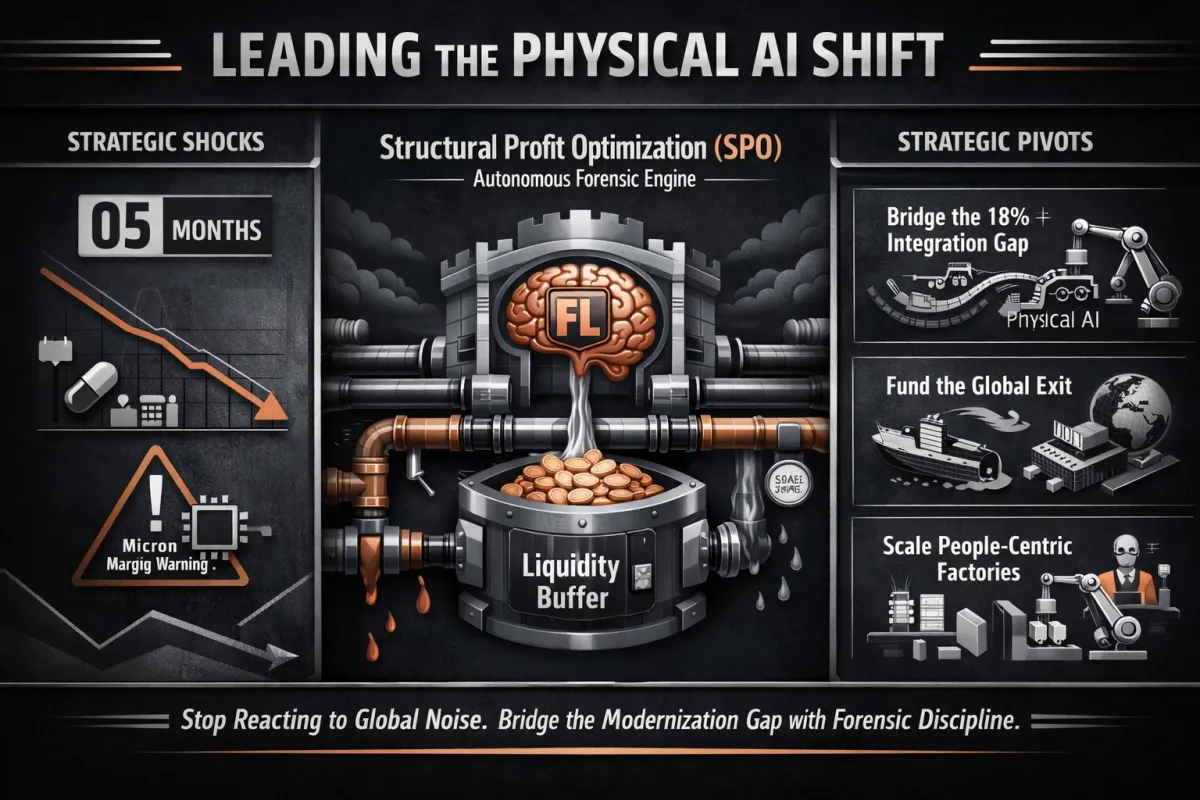
The Margin Machine: Navigating the "Physical AI" Shift and Trade Tsunami
On March 18, 2026, Micron Technology shattered fiscal records, reporting a 196% year-over-year revenue surge and a staggering 74.9% gross margin [1.1]. The catalyst? The "AI Revolution." Micron has proven that AI is no longer an experimental cost center; it is a margin machine for those who have the infrastructure to support it.
However, for the broader manufacturing sector, a critical warning accompanied these results: "Without faster memory, AI cannot scale." In a strategic context, the same logic applies to the mid-market. Without the structural liquidity to fund the hardware and the talent, the "AI Revolution" remains a theoretical exercise rather than a balance sheet asset.
The 18% Integration Gap: The Physical AI Window
The shift from screen-based AI to the shop floor—what Deloitte calls Physical AI (PAI)—is accelerating. Their new report, "Physical AI: The Moment of Acceleration," reveals a looming divide. While only 3% of firms have fully integrated PAI today, that number is forecast to jump to 18% within just 24 months [3.1].
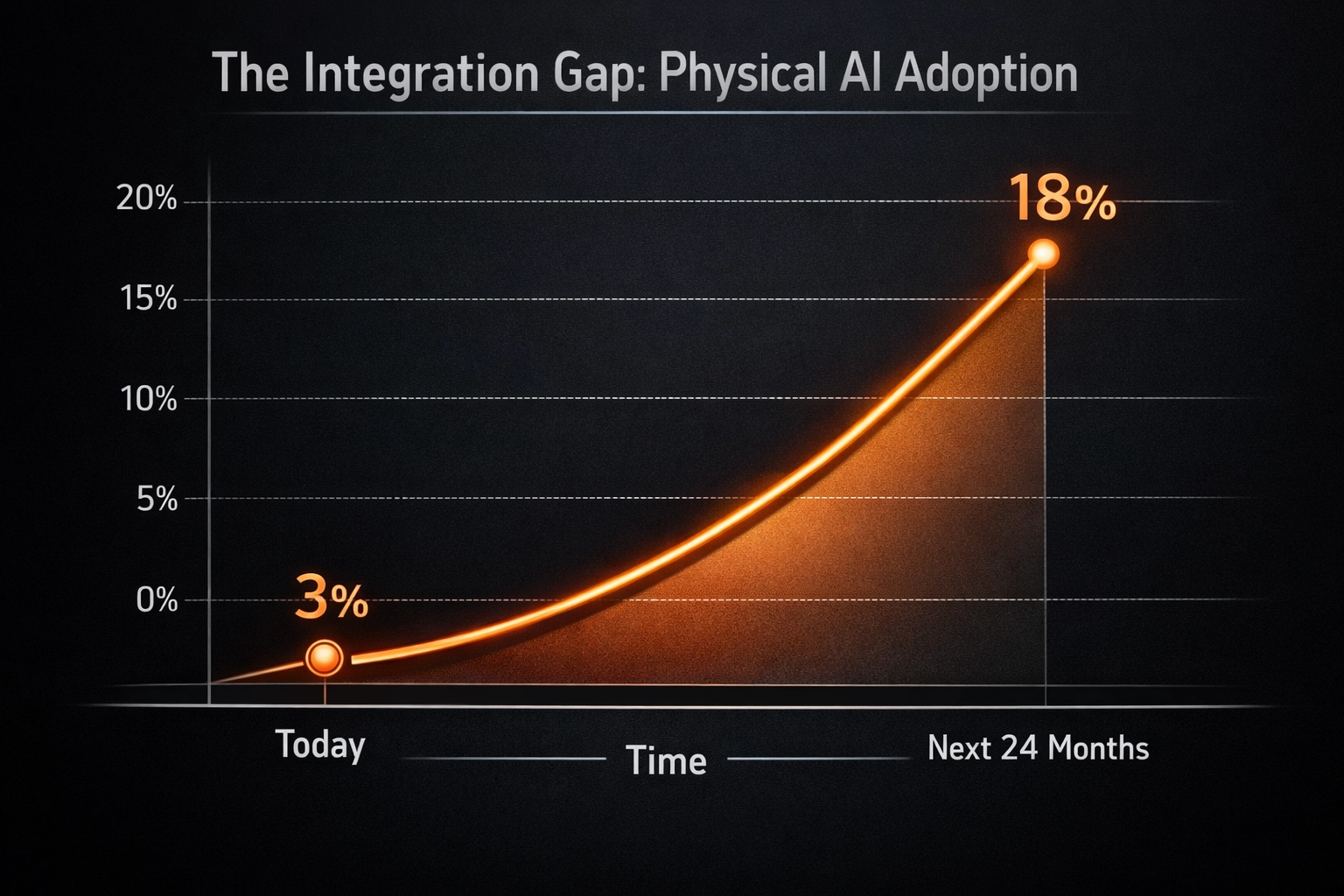
The window to build a competitive edge through intelligent physical systems is narrowing. Deloitte notes that "Cost and Resource Requirements" remain the primary barrier for 41% of firms. The challenge for 2026 isn't a lack of technology; it is a lack of discretionary capital to fund the proving grounds required to stay ahead of that 18% curve.
Trade Enforcement: The Section 301 Tsunami
While margins rise in tech, trade risks are spiking in production. U.S. Trade Representative Jamieson Greer officially launched a new Section 301 probe this week into "structural excess capacity" across 16 trading partners, including China, Mexico, and the EU [2.1].
This is a targeted strike on specific overproduction in steel, EVs, and semiconductors. If your supply chain relies on these regions, your inputs are about to become significant liabilities. Manufacturers can no longer afford to wait for duties to land before diversifying. The administrative clock is running, and the capital required to pivot your supply chain must be secured now.
Optimism vs. The "Cost-Crushers"
The NAM Q1 2026 Outlook shows that manufacturer optimism (75.3%) has topped the historical average for the first time in three years [4.1]. This is a welcome sign of resilience, yet the "Cost-Crushers" haven't retreated. Health Care Costs (69.8%) and Raw Material Costs (57.5%) remain the top two non-trade business challenges.
Optimism is high, but so is the pressure on EBITDA. When 70% of executive bandwidth is consumed by managing rising input costs, the "Physical AI" roadmap often gets sidelined. To win in 2026, the strategy must move beyond simply "weathering the storm" and toward reclaiming the margin lost to operational inertia.
The Greg Rusnell Verdict: The Era of Structural Discipline
The record margins at Micron and the Physical AI surge at Deloitte are signals of a new industrial standard. But you cannot achieve these margins if your P&L is being eroded by what I call the Maintenance Tax—the invisible leakage found in un-governed vendor contracts and administrative decay.
In 2026, Structural Discipline is your only true competitive advantage. The winners will be those who bridge the "Modernization Gap" by identifying internal waste and converting it into a Modernization Dividend. It is time to stop reacting to the global noise and start governing the capital you already have.
How Profit Logic Helps: We solve the modernization funding gap through Success-Based Stewardship. As an Autonomous Forensic Engine, we identify the ~4% of revenue lost to vendor inertia and redirect it toward your strategic goals. Our model is "Net-Zero" cost; we find the capital first, and our interests stay aligned with yours for a full 36-month term to ensure those margins are protected.
[1.1] Micron Technology Fiscal Q2 2026 Earnings: March 18, 2026. Record revenue and 74.9% gross margin data.
[2.1] USTR Section 301 Initiation Notice: March 11-17, 2026. Jamieson Greer on structural excess capacity investigations.
[3.1] Deloitte "Physical AI" Whitepaper: March 18, 2026. Adoption and barrier statistics for Physical AI (PAI).
[4.1] NAM Manufacturers’ Outlook Survey (Q1 2026): Released March 12, 2026. Data on optimism levels and top business challenges.
