
The Capacity Paradox: Thawing the "Investment Chill" Through Structural Governance
The U.S. manufacturing sector has reached a 3.5-year high, with the ISM Manufacturing PMI rising to 52.7 in March—the fastest pace of expansion since August 2022 [1.1]. While 13 industries reported growth, the headline strength masks a startling "Investment Chill." New data reveals that while firms are optimistic about demand, their expectations for equipment and software spending have turned negative, falling from 2 to -2. This creates a "Capacity Paradox": Manufacturers have the order books to grow, but they lack the governed capital to fund the machinery required to fulfill them.
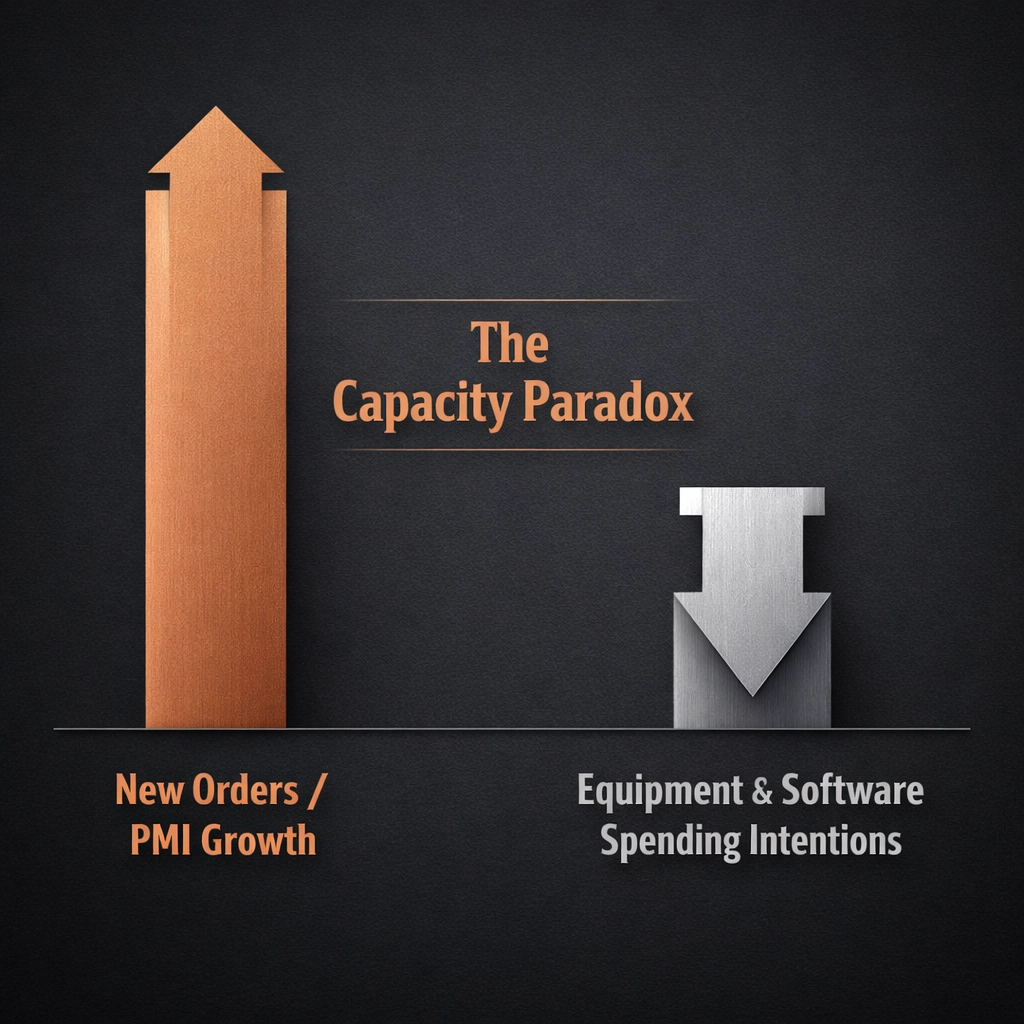
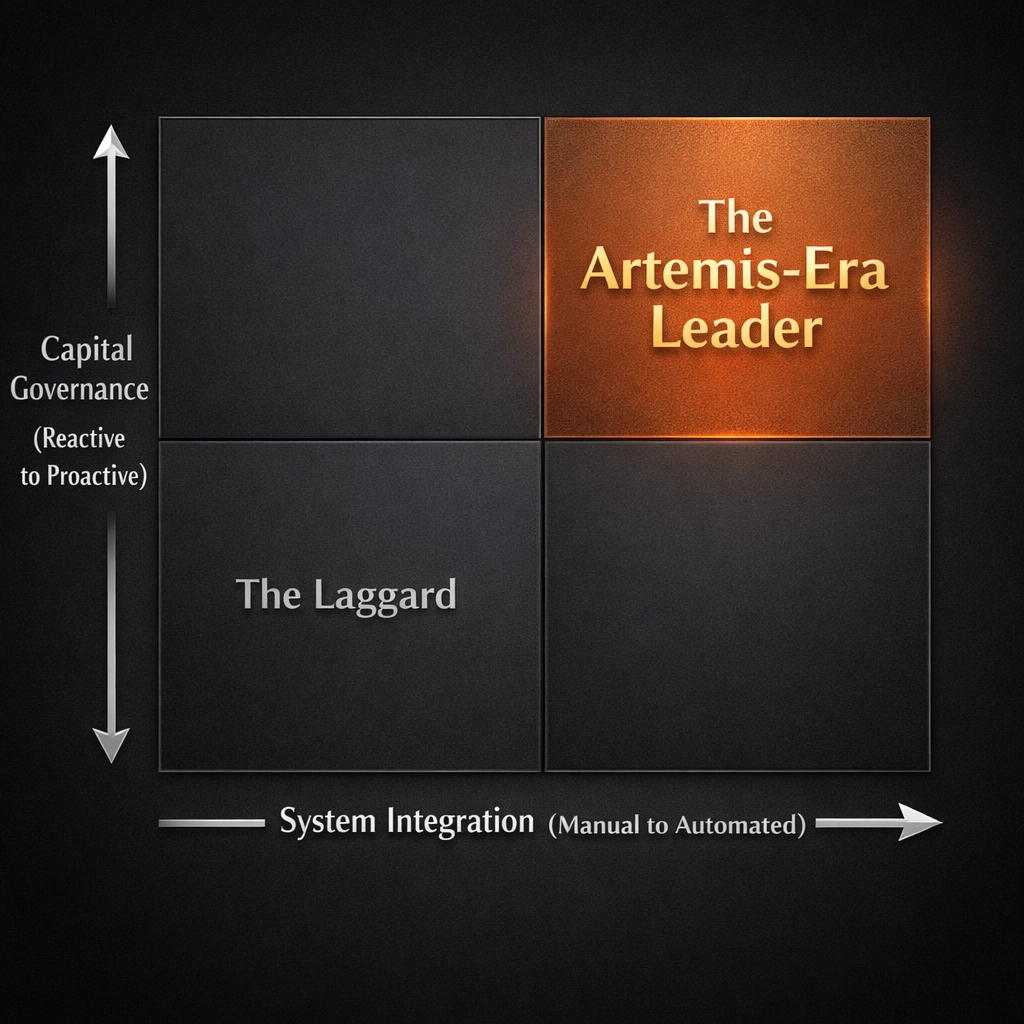
This divergence is not merely a macroeconomic symptom; it is a clinical failure of internal capital mobility. According to PwC’s latest Automation Forecast, the share of "highly automated" manufacturers is expected to more than double from 18% to 50% by 2030 [4.1]. For the executive, this sets a definitive deadline. The divide between "tech-enabled leaders" and "laggards with patched-up systems" is widening. When capital spending freezes during a period of high demand, it is often because the P&L is being eroded by the Maintenance Tax—the ~4% invisible leakage found in un-governed vendor contracts and administrative decay. Reclaiming this structural capital is the only path to thawing the investment chill without taking on 2026 debt loads.
The stakes for this transition have moved beyond simple efficiency into the realm of national industrial pride. The successful liftoff of NASA’s Artemis II mission (USA) this week, powered by thousands of domestic manufacturers, signals the dawn of the "Arsenal of Democracy 2.0." However, participating in this high-complexity "Artemis Era" requires space-age financial governance. Organizations cannot power the next generation of aerospace or defense innovation while relying on 1990s-era spreadsheets to manage their overhead. To move from a "laggard" with patched-up systems to a leader in the Artemis supply chain, firms must move toward Structural Capital Reclamation.
The urgency for this governance is further compounded by the "Pricing Paradox." New data from Thomasnet and Xometry shows that 76% of manufacturers expect to raise prices again this year, citing raw material costs (38%) and labor availability (32%) as the primary drivers [3.1]. In a competitive global market, "raise prices and hope" is a fragile strategy. Structural Profit Optimization offers a superior alternative: offsetting rising input costs by capturing the internal waste that currently erodes the margin baseline.
Furthermore, federal opportunities are currently sitting on the table for those with the governance to claim them. The Department of Energy (USA) recently announced $155 million in new funding for industrial innovation and emissions reduction [5.1]. Yet, as recent federal audits suggest, traceability is the gatekeeper. If an organization's internal systems cannot clinically link process to profit, they remain effectively "invisible" to these grants.
Ultimately, the goal for the 2026 executive is to transform the P&L from a record of costs into an engine of modernization. By identifying the ~4% leakage and converting it into a Modernization Dividend, leaders can fund the "highly automated" future predicted by PwC and exit the laggard category before the 2030 window closes.
Strategic Execution: Profit Logic facilitates this shift by acting as an Autonomous Forensic Engine. Through our Success-Based Stewardship model, we identify and capture the structural leakage that fuels the "Investment Chill." We secure the ~4% EBITDA lift required to fund equipment and software upgrades, remaining in the trenches for 36 months to ensure that your modernization is self-funding and sustainable.
[1.1] ISM Manufacturing PMI Report: April 3, 2026. March data showing 52.7 expansion and equipment spending contraction.
[3.1] Thomasnet/Xometry Pricing Survey: March 31, 2026. Data on price increases and raw material/labor cost drivers.
[4.1] PwC Industrial Update: March 30, 2026. "The 2030 Automation Divide" share forecast.
[5.1] Dept. of Energy Innovation Infusion: April 1, 2026. Announcement of $155M in federal funding for industrial innovation.
