
Most Mid-Market CFOs Are Unknowingly Rubber Stamping Their Own Margin Decay
If you sit in the C-suite of a mid-market manufacturing plant right now, your inbox is full of macroeconomic noise.
Futures markets are pricing in an interest rate hike at the U.S. Federal Reserve meeting this week. Across the border in Canada, federal and provincial governments are expanding $1 billion emergency loan programs for tariff impacted industries.
Every external headline tells you the same story. If you want to automate a production line, upgrade your plant floor systems, or expand capacity, your only choice is expensive commercial debt or government loans.
So leadership teams fall into a comfortable trap. They freeze capital expenditures. They sit in executive meetings and declare that modernization must wait until credit markets loosen.
That logic is flawed.
The barrier to your company growth is not central bank policy. The capital required to fund your modernization project is already sitting inside your operating P&L. It is quietly bleeding out through unexamined vendor contracts, administrative surcharge drift, and unmapped tax shields.
The Borrowing Illusion: Why Relief as Debt Fails
Taking on commercial debt at current rates starves your future cash flow. Accepting a government loan to survive market shifts simply exchanges operational friction for long term balance sheet liabilities.
Why do mid-market manufacturers look for outside financing when their own internal ledgers are leaking cash?
Because peripheral operational spend lives in an organizational dead zone.
Categories like freight, waste collection, telecom, payment processing, packaging supplies, and SaaS licenses are peripheral to core production. No single executive owns them with absolute authority. They get touched once every three years during a rushed renewal and ignored in between.
Meanwhile, the vendor sales engine negotiates those exact contracts every single day.
Sending an internal controller or purchasing manager to negotiate peripheral vendor agreements is a classic David and Goliath story. The difference is that in the corporate world, Goliath wins every time. Goliath has dedicated sales engineers, aggressive quotas, and terms built specifically to protect supplier profit margins. Your internal team is just trying to keep the plant running.
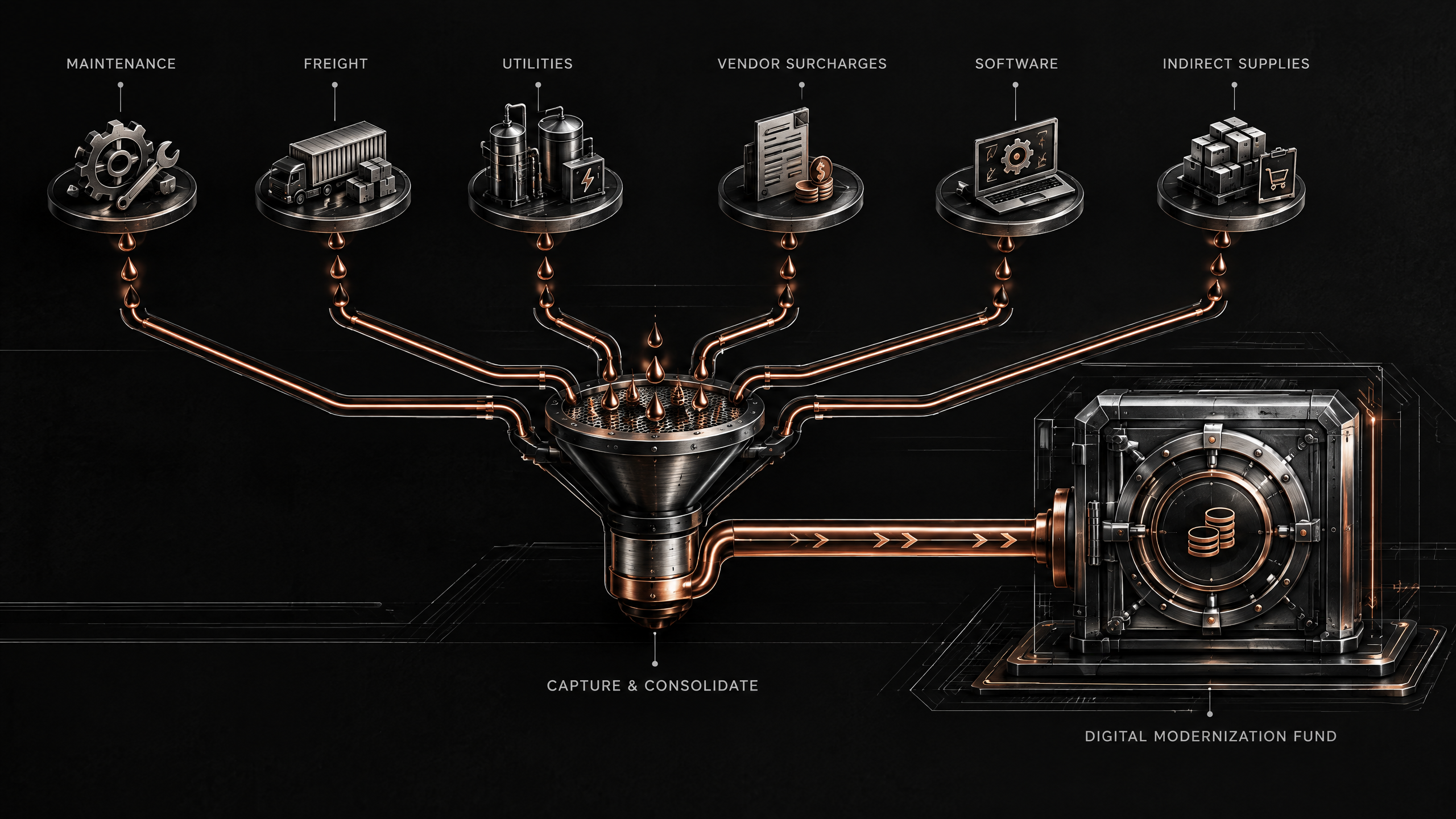
The result is a silent Maintenance Tax. Unindexed fuel surcharges, lapsed volume discount brackets, and creeping administrative fees quietly swallow up to 4% of your top line revenue every year.
Two C-Suite Reality Checks
This operational leakage creates distinct challenges depending on your role at the executive table:
1. For the CFO and Owner: The Capital Allocation Fallacy
Waiting for interest rates to drop before investing in your facility is a losing strategy. While you wait on central bankers, vendor price drift eats the exact margins you need to remain competitive. Reclaiming that lost 4% converts peripheral administrative waste into a self funding stream of capital. It allows you to fund your strategic growth project using money you have already earned, without taking on debt or giving up equity.
2. For the Controller and Operations Lead: The Unfair Fight
You are held accountable for vendor costs, but you are rarely given specialized category tools needed to judge if a quote is competitive. Expecting your internal team to fight peripheral vendor quote battles on top of managing daily plant operations creates massive exposure. You deserve specialist category capability to ensure supplier pricing remains honest over the entire 36 month contract lifecycle.
Stop Waiting on Banks. Fund Your Own Roadmap.
Modernization deferral is an unrecorded balance sheet debt. Every quarter you delay upgrading your plant floor because borrowing is too expensive, competitors who figured out how to self fund their growth pull further ahead.
You do not need central bank rate cuts to execute your strategic roadmap. You do not need to take on new commercial loans to survive market shifts. The capital to fund your plant modernization is sitting right inside your operating ledgers.
How to Evaluate Your Internal Exposure
Before you sign off on another commercial credit facility or freeze your 2027 capital outlay, ask your finance team two honest questions:
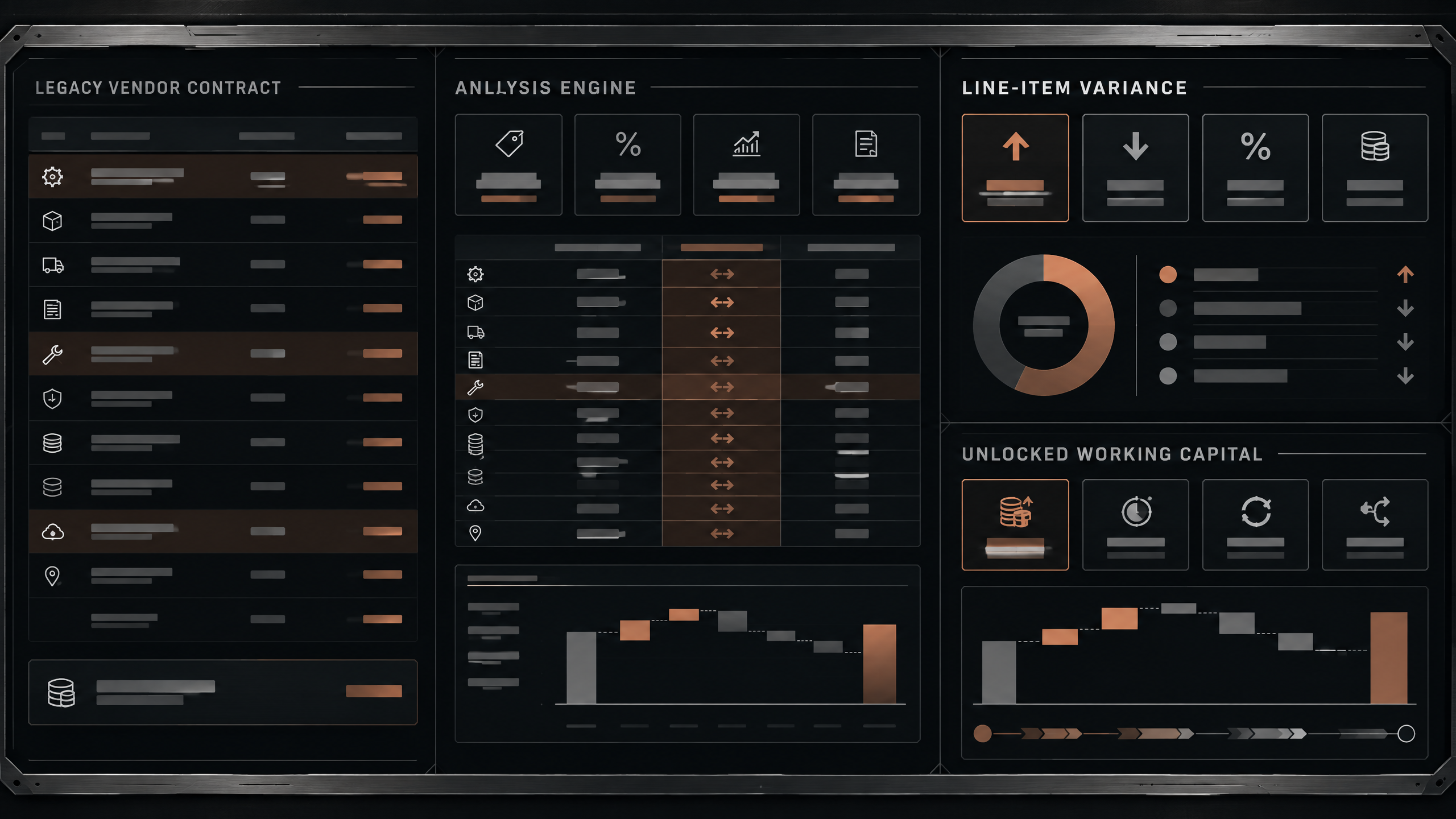
When was the last time we independently reviewed the line items on our peripheral vendor agreements against current market rates? If the answer is more than 12 months ago, rate drift is already occurring.
How does our AP department actually process monthly invoices? In almost every mid-market plant, Accounts Payable is designed to verify the bottom line total against previous months or budget targets. They do not audit individual line items against the original signed contract terms.
This is not a failure of your finance team. Accounts Payable is designed to ensure operational continuity and catch sudden invoice spikes, not perform forensic contract auditing.
That structural gap is precisely why Profit Logic exists.
We perform the technical heavy lifting, benchmark your peripheral spend using proprietary national pricing databases, and build a plan for your specific modernization project.
Contact Profit Logic today to schedule a confidential baseline evaluation and discover how much capital is hiding inside your operating P&L.
